
Birdwatching Around Sarasota: A Newcomer's Circuit
Here's something that happens to a lot of people who move here. They arrive with no interest whatsoever in birds. Then a great blue heron stands in their driveway like it owns the place, a pair of sandhill cranes walks down the street trailing a chick, and something like six months later they own binoculars and have opinions about spoonbills.
The Sarasota area is a genuinely excellent birding region. It sits on a major migratory corridor, has an unusual concentration of protected wetland and coastal habitat, and the birds here are large, colorful, and remarkably unbothered by people. That last part matters if you're a beginner, because you don't need expensive optics to see something spectacular.
The Celery Fields
Start here. The Celery Fields, east of Sarasota off Palmer Boulevard, is a former agricultural area converted into a stormwater management and wetland site, and it has become one of the premier birding locations in Florida.
The setup is ideal for beginners. There's a large mound with a path to the top giving you a panoramic view, boardwalks and trails around the wetlands, and open sight lines that make spotting easy. It's free, it's close to town, and you can do a productive visit in an hour.
The species list here is long and includes rarities that draw birders from across the state. On a typical winter morning you might see herons, egrets, ibises, limpkins, glossy ibis, roseate spoonbills, a variety of ducks, raptors overhead, and any number of smaller species in the brush.
Local birding groups run regular walks here, and joining one is by far the fastest way to learn. Experienced birders are, in our experience, almost universally delighted to point things out to a beginner.
Myakka River State Park
Bigger, wilder, and more of a commitment. Myakka's combination of prairie, marsh, lake, and hammock supports a different and broader set of species than a single wetland does.
The lake areas produce wading birds and waterfowl in numbers, including large concentrations in the dry season when water levels drop. The prairie sections are good for raptors, including crested caracara, which is a specialty of this part of Florida and a genuine prize for visiting birders. The canopy walkway gives you a shot at canopy species you'd never see from the ground.
Our full Myakka River State Park guide covers seasons, practicalities, and everything else the park offers.
Robinson Preserve and the Coastal Sites
Up in Northwest Bradenton, Robinson Preserve is a large restored coastal wetland with trails, an observation tower, and paddling access. The mix of salt marsh, mangrove, and open water produces shorebirds, waders, and raptors, and the tower gives you a view across the whole system.
Nearby Neal Preserve and the causeway areas add more shoreline habitat. Along the coast generally, the passes, sandbars, and beach edges at low tide are where you'll find shorebirds, terns, skimmers, and pelicans working the water.
Quick note on beach nesting: several shorebird species nest directly on the sand in spring and summer, and the nests are nearly invisible. Where you see roped-off areas with signs, stay well outside them. Our guide to beach safety and etiquette covers the broader rules.
Rookeries
A rookery is a colonial nesting site, and watching one in season is one of the great wildlife experiences available here. Dozens or hundreds of large wading birds nesting in close quarters on an island or in a stand of trees, with constant noise and activity and chicks visible in the nests.
There are several around the region, some accessible by land and some best seen from the water by kayak. The Venice Area Audubon Rookery is a well-known and accessible example. Nesting season generally runs in the cooler and early spring months, which is when to go.
The rule at any rookery is distance. Disturbing nesting colonies can cause abandonment, which kills chicks. Use a long lens or binoculars and stay put.
What You'll Actually See
For a newcomer, the headline species here are big and unmistakable.
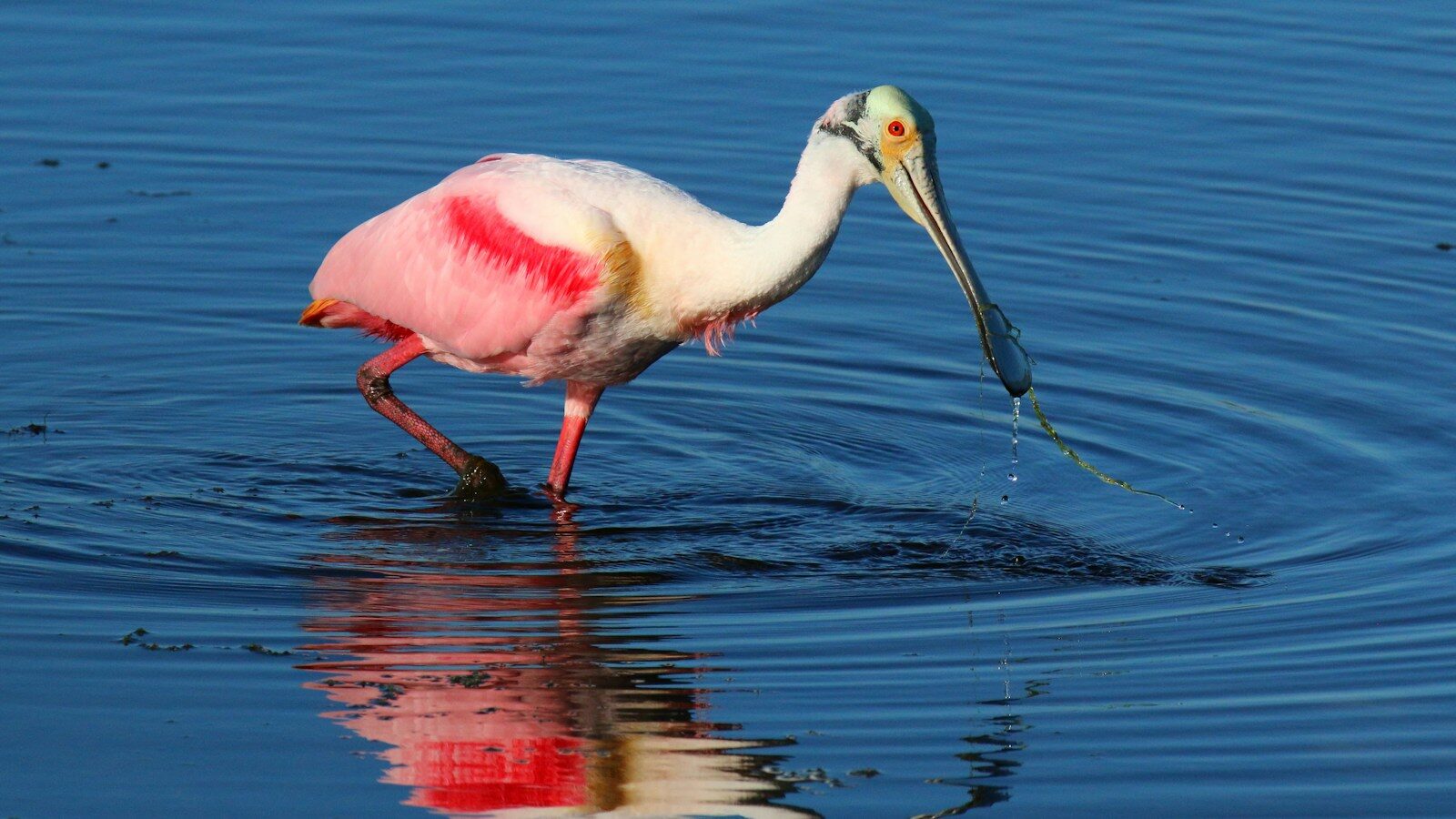
Roseate spoonbill. Pink, with a spatula bill. People routinely mistake them for flamingos. Seeing your first one is a moment.
Sandhill crane. Four feet tall, gray, with a red crown, and remarkably comfortable in suburban neighborhoods. They walk through yards, stop traffic, and make a bugling call you'll learn to recognize. They're protected, so don't feed them, however much they seem to be asking.
Wood stork. Large, bald-headed, prehistoric-looking. A conservation success story worth appreciating.
Anhinga. The one perched with wings spread out to dry, looking like a heraldic emblem. They swim underwater with just the neck showing, which is why they're called snakebirds.
Ospreys and bald eagles. Both common here. Ospreys nest on channel markers, light poles, and platforms throughout the region. Eagles are more numerous than most newcomers expect.
Herons and egrets in every size, from the tiny green heron to the great blue. White and glossy ibis in flocks that work suburban lawns for insects.
Plus, in winter, large numbers of migratory ducks, warblers, and shorebirds that aren't here the rest of the year.
Seasons
Winter, roughly November through March, is the best birding of the year and also the most pleasant time to be outside. Migratory species are present, resident species are often in breeding plumage, and the weather is ideal.
Spring brings migration movement and nesting activity at the rookeries. Summer is hot, buggy, and slower for birding, though early mornings still produce. Fall migration picks back up.
Regardless of season, early morning is when birds are most active. This is not a hobby that rewards sleeping in. Our guide to Sarasota weather and seasons covers the annual pattern.
Getting Started Cheaply
You need less than you think. A decent pair of binoculars in the eight-by-forty-two range is the one purchase worth making, and good entry-level options are inexpensive. A free bird identification app handles the rest, and the popular ones can identify birds by sound, which is genuinely useful.
Beyond that: a hat, sunscreen, water, insect repellent in the warm months, and comfortable shoes. Our guide to Florida bugs and critters is relevant if you're heading into wetlands in summer.
The single best investment, though, is joining a local group. Sarasota and Manatee counties have active Audubon chapters and birding communities that run free walks. You'll learn more in one morning with an experienced birder than in a month of solo effort, and it's a very easy way to meet people, which matters when you're new. Our guide to making friends after moving makes the broader case.
Birding in Your Own Yard
One of the pleasures here is that you don't have to go anywhere. Depending on your neighborhood, your regular cast might include ibis flocks, mockingbirds, cardinals, woodpeckers, ospreys overhead, and cranes in the street.
Communities with lakes and preserved wetland, which describes a lot of the newer master-planned developments across Lakewood Ranch and elsewhere, often have excellent resident bird populations right outside the window. That's a quiet argument for those lots that doesn't show up in the sales brochure.
If access to that kind of habitat matters to you, factor it into your search. Our community matching quiz accounts for how you want to spend your time, and our guides to parks and trails and manatees and dolphins cover the rest of the local wildlife.


Ready to find your place on the Suncoast?
Take the 60-second quiz to find your community, or talk to a local expert now.