
Myakka River State Park: Sarasota's Wild Side
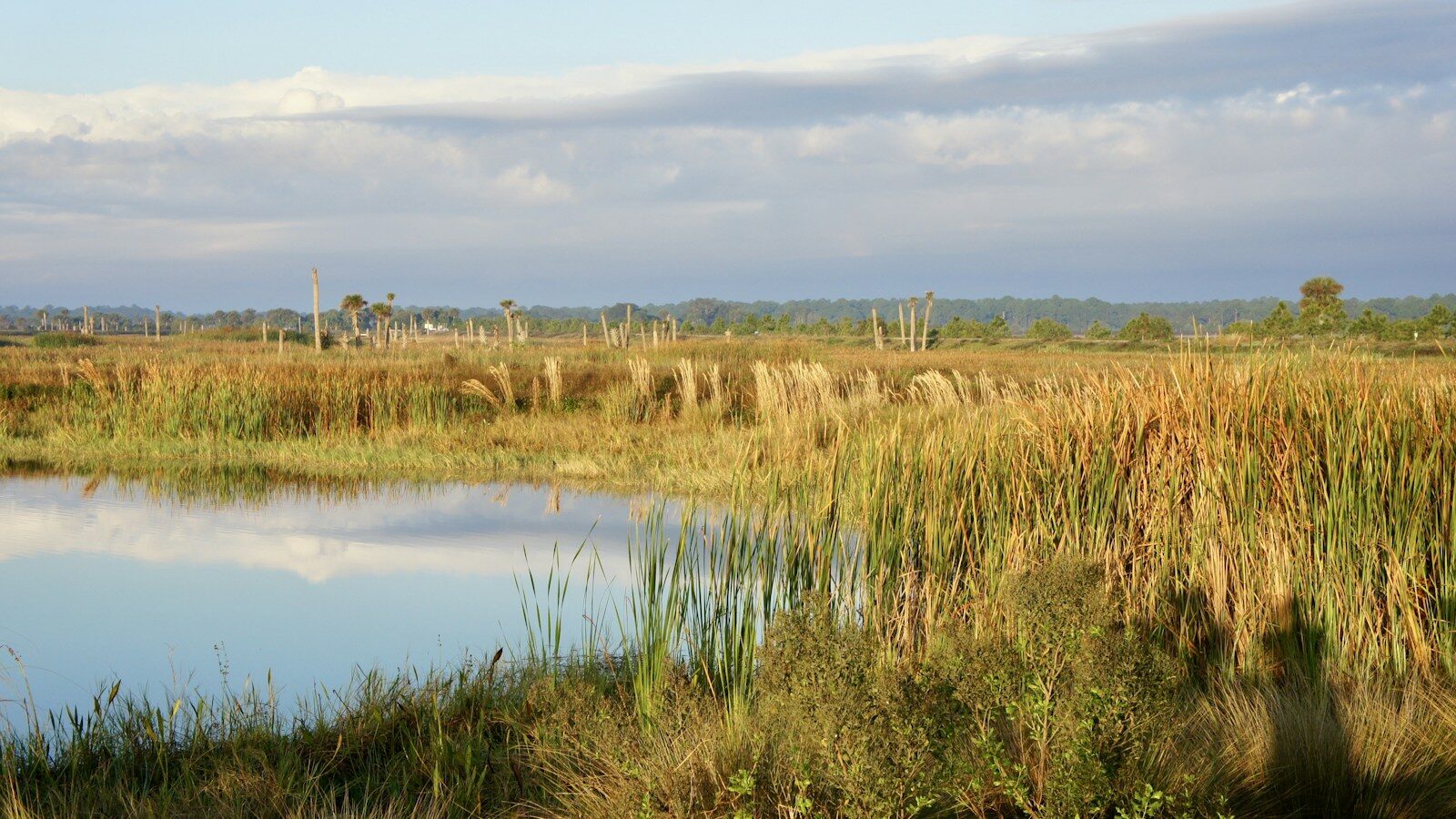
Most people move to this part of Florida for the water on the west side. What surprises them is what's on the east side. Drive about thirty minutes inland from downtown Sarasota on State Road 72 and the strip malls thin out, the land opens up, and you arrive at Myakka River State Park: roughly fifty-eight square miles of prairie, wetland, oak hammock, and river.
It's one of Florida's oldest and largest state parks, and it looks like the Florida that existed before any of this was developed. For newcomers, it's the single best place to understand what the landscape here actually is when you take the houses away.
What the Park Actually Is
Myakka protects a long stretch of the Myakka River along with two lakes and the surrounding habitat. Much of it is dry prairie, which is a globally rare ecosystem and looks nothing like what most people picture when they think of Florida. Wide open grassland with scattered palms and pines, big sky, and hawks working the thermals.
Interwoven with that are cypress swamps, oak and palm hammocks, marshes, and the river itself. The variety within a single park is remarkable, and it means a day here can feel like several different places.
The park was largely developed in the 1930s by the Civilian Conservation Corps, and some of the original structures, including log cabins, are still in use. That history is part of the charm.
The Canopy Walkway
The signature attraction is the canopy walkway, a suspension bridge strung through the treetops about twenty-five feet up, connected to a tower that takes you considerably higher. It was one of the first public treetop walkways in North America.
The bridge itself sways a little, which delights kids and unsettles a certain kind of adult. The tower at the end gets you above the canopy with a long view across the park. On a clear morning it's genuinely beautiful, and it gives you a sense of the scale of the place that you can't get from the ground.
It's a short walk from the parking area and accessible to most fitness levels, which makes it the easy default for visitors and out-of-town family.
The Wildlife
This is the main event. Myakka has one of the higher concentrations of alligators in the state, particularly around the weir and the lower lake area during dry season, when receding water concentrates them. Seeing dozens at once is normal. It's an extraordinary thing to witness and completely safe from the designated viewing areas.
Birding here is exceptional. Roseate spoonbills, wood storks, sandhill cranes, limpkins, herons and egrets of every description, ospreys, bald eagles, and in the cooler months large numbers of migratory waterfowl. Serious birders come from a long way for this. Our guide to birdwatching around Sarasota covers the wider circuit.
Beyond birds and gators, you have a good chance of seeing deer, wild turkeys, armadillos, otters, and feral hogs. Bobcats are present but rarely seen. Sunrise and the hour before sunset are by far the most productive times.
On the alligator question, since it comes up constantly with newcomers: keep your distance, never feed them, don't let dogs near the water's edge, and stay on the boardwalks and trails. Our guide on whether alligators are a concern in Florida covers the practical reality.
Getting Out on the Water
The Upper Myakka Lake and the river are open to paddling, and it's a completely different experience from paddling the bay. Freshwater, cypress, and a genuinely wild feel. You can bring your own kayak or canoe, or rent at the park concession.
The park has also historically run large airboat tours on the upper lake, which are popular with visitors and a fast way to see a lot of wildlife. Operations and availability change over time, so check current offerings before you plan around it.
For paddlers, water levels matter enormously. In the dry season parts of the river become too shallow to pass. In the wet season everything is navigable but you'll want to watch the weather. Our guide to kayaking and paddleboarding around Sarasota covers gear and safety.
Hiking and Biking
There are roughly forty miles of trails, ranging from short boardwalks to a long backcountry hiking trail system with primitive campsites. The main park drive is about seven miles and is popular with cyclists, since it's paved, low-traffic, and flat.
The backcountry trails are where you go to be genuinely alone. They cross prairie and hammock, they're marked, and they're not difficult in terms of terrain. What makes them demanding is exposure. There's very little shade on the prairie sections and no water sources you'd want to rely on.
Which brings us to the most important practical point.
Seasons Matter More Here Than Anywhere
Myakka in January is one of the most pleasant places in Florida. Myakka in July is an endurance event.
Dry season, roughly November through April, is the time to go. Cooler temperatures, lower humidity, far fewer mosquitoes, concentrated wildlife, and migratory birds. This is when locals go and when you should bring visiting family.
Wet season, roughly June through September, brings heat, humidity, daily afternoon thunderstorms, aggressive mosquitoes, and higher water that disperses wildlife. Trails can flood. If you go, go at dawn, bring serious insect repellent, and be off the open prairie well before the storms build. Our guide to summer storms and lightning safety explains the daily pattern, and it matters a lot when you're standing in open grassland.
Mosquitoes and no-see-ums in the wet season are not a minor inconvenience here. Our guide to Florida bugs and critters is worth reading before your first summer visit.
Camping and Staying Over
The park has developed campgrounds with facilities, the historic CCC-era cabins, and primitive backcountry sites for hikers. The cabins in particular book far in advance, especially for dry season weekends, so plan well ahead.
Staying overnight changes the experience substantially. The night sky out there is better than anywhere near the coast, and the dawn chorus across the prairie is something worth setting an alarm for.
Practical Notes
There's a per-vehicle entrance fee, and if you're going to visit more than a handful of times a year, the Florida state park annual pass pays for itself quickly. It works at parks statewide, which is useful given how many good ones are within driving distance.
Bring more water than you think. Bring sun protection regardless of season. Cell service is spotty in parts of the park. The main areas are accessible, but backcountry trails are not.
The park is popular, and on a beautiful winter weekend the main areas get busy. Weekday mornings are dramatically quieter.
Why We Recommend It to Newcomers
There's a version of living on the Gulf Coast where you never go more than two miles from the water, and it's a perfectly nice version. But it leaves out something important about where you actually live.
Myakka is the antidote. It's a reminder that this region sits on the edge of a landscape that's ancient, strange, and still largely intact if you drive half an hour. People who make a habit of going out there tend to develop a different relationship with the place than people who only know the beaches.
It's also free entertainment for visiting relatives, which shouldn't be underrated.
Our guides to parks, trails, and the outdoors and day trips from Sarasota cover what else is within reach. And if proximity to open space is shaping where you want to live, our community matching quiz takes that into account.


Ready to find your place on the Suncoast?
Take the 60-second quiz to find your community, or talk to a local expert now.