
What It Really Costs to Own a Boat in Sarasota
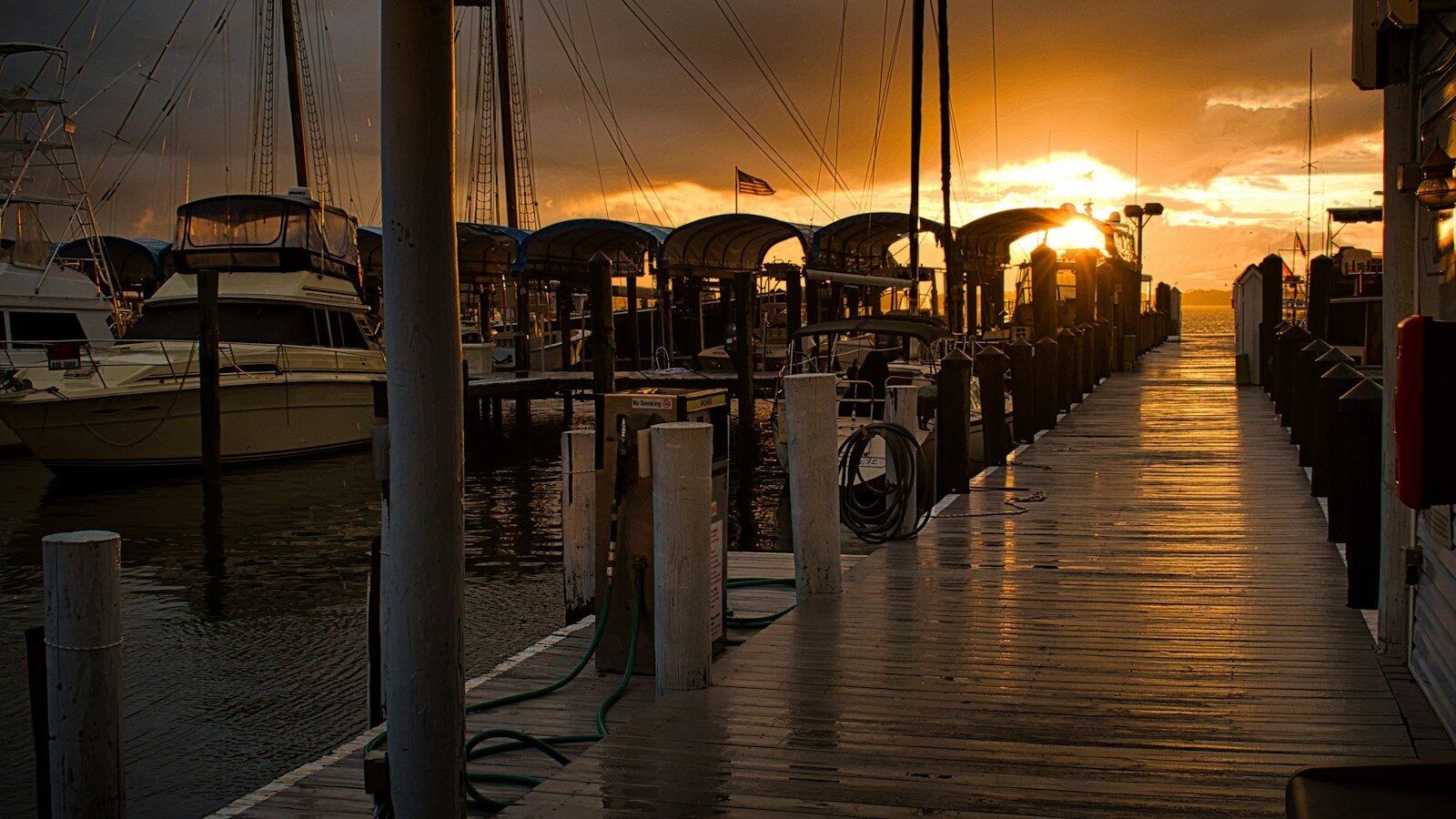
A lot of people move to the Gulf Coast with a boat in the plan. It's a reasonable ambition. We have protected bays, barrier islands, passes to the Gulf, offshore fishing, and sandbars that turn into floating parties on weekends. If you're going to own a boat anywhere, this is a good place for it.
What we'd encourage is going in with realistic numbers, because the purchase price is genuinely the smallest part of the equation and almost nobody budgets the rest properly.
Where You Keep It Is the Big One
Storage is usually the largest recurring cost, and your options vary enormously in price.
A Wet Slip
Keeping the boat in the water at a marina. Most convenient: you show up, untie, and go. Most expensive in most cases, and priced by length, so every extra foot costs you monthly.
Demand for slips in our area is high and availability is tight, particularly for larger boats and in desirable locations. Waiting lists are common. If a slip matters to your plan, investigate availability before you buy the boat, not after.
Wet storage also means the hull stays in salt water, which accelerates everything: growth, corrosion, and the need for bottom paint.
Dry Stack Storage
The racks you see at marinas, where a forklift pulls your boat out and launches it when you call ahead. Usually less expensive than a comparable wet slip, and much better for the boat, since it sits out of the water.
The tradeoff is spontaneity. You typically call ahead, and there are operating hours. Coming back late from a sunset run can be a problem. Size limits apply too, since the racks have height and weight constraints.
For most recreational boats in the twenty to thirty foot range, dry stack is often the sensible middle option.
Your Own Dock
The dream for a lot of buyers, and the reason waterfront homes carry the premium they do. If you buy a canal or bayfront home with a dock and a lift, your storage cost is folded into the house.
But not free. Docks and seawalls require maintenance and eventually replacement, and both are expensive. Lifts need servicing. And a dock's usefulness depends on water depth at low tide and on what's between you and open water, including fixed bridges with clearance limits. A beautiful dock that your boat can't get out of at low tide is a common and expensive disappointment.
If you're buying waterfront specifically for boating, have someone knowledgeable assess the seawall, the depth, and the route out before you commit. Our guides to waterfront and boating life and Northwest Bradenton cover areas where this works well.
Trailer at Home
The cheapest option, if your boat is small enough and your community allows it. That second condition catches a lot of people. Many deed-restricted communities here prohibit boat and trailer parking in driveways or in view, which means paying for offsite storage anyway.
Check the HOA rules before you assume. Our guide to HOAs and deed restrictions covers what to look for, and it's a genuinely common source of post-purchase frustration for boaters.
Trailering also means using public ramps, which in season means waiting.
Insurance
Boat insurance in Florida costs more than in most states, for the same reasons everything else does: named storm exposure, high vessel density, and expensive claims.
A few things carriers will care about: where and how the boat is stored, whether you have a hurricane plan, the boat's age and construction, your boating experience, and your intended cruising area.
Read the named storm provisions carefully. Many policies have specific requirements about hauling out or securing the vessel when a storm is named, and deductibles for named storm damage are often much higher than standard deductibles. Some policies limit coverage during hurricane season in certain areas.
And as with car and home insurance here, carriers typically stop binding new coverage once a storm is in the forecast. Don't wait.
Maintenance: The Part Everyone Underestimates
Salt water is relentless. A boat here needs more attention than the same boat on a freshwater lake up north, and skipping maintenance is how you turn a moderate expense into a major one.
Bottom paint. If the boat lives in the water, the hull needs antifouling paint, typically reapplied on a regular cycle. It's a haul-out job and it's not cheap. Dry-stored boats largely avoid this.
Engine service. Annual service at minimum, and marine engines here work in a corrosive environment. Outboards need flushing after every saltwater use, which is a habit rather than a cost, but it matters enormously.
Zincs and anodes. Sacrificial anodes protect metal components from galvanic corrosion and need periodic replacement.
Canvas, upholstery, and electronics. Our sun destroys these faster than you'd believe. UV exposure here is brutal on vinyl, canvas, and plastics. Covers help and are themselves consumable.
Cleaning. Either your time every week or someone else's money.
Trailer maintenance if you trailer. Salt water and wheel bearings are natural enemies.
A widely used rule of thumb is to budget roughly ten percent of the boat's value annually for maintenance and storage combined. In salt water in Florida, that's a floor rather than a ceiling for anything more complex than a small outboard.
The Other Line Items
Registration. Florida requires annual vessel registration, priced by length. Modest compared to everything else.
Fuel. Boats are not efficient, and marina fuel is priced accordingly. A day of running around the bay in a mid-size boat costs meaningfully more than a tank of gas for your car.
Safety equipment. Required gear, replaced as it expires: life jackets, flares, fire extinguishers, signaling devices.
Towing membership. Worth having. A commercial tow without one, after a breakdown offshore, is an unpleasant number.
Boater education. Florida requires a boating safety education ID card for operators born after a certain date. The course is inexpensive and, frankly, worth taking regardless of whether you're required to.
The Alternatives Worth Considering First
We suggest this to almost everyone who asks: before buying, spend a season doing it another way.
Boat clubs charge a joining fee and monthly dues, and in exchange you reserve boats from a fleet and simply show up. No maintenance, no storage, no insurance, no cleaning, no winterizing worries. You trade ownership and absolute availability for the elimination of essentially every ongoing hassle.
For people who realistically go out two or three times a month, the math frequently favors a club. For people who'll be on the water every weekend and want their boat rigged their way, ownership wins. Our guide to boat clubs and marinas in Sarasota covers the local options.
Fractional ownership or peer-to-peer rental platforms sit in between.
Renting occasionally is the cheapest way to find out whether you'll actually use a boat as much as you imagine. A lot of people discover the answer is no, and that's a valuable and inexpensive thing to learn.
A kayak or paddleboard gets you on the water for a tiny fraction of the cost, and in our shallow bays and mangrove systems it goes places a powerboat can't. Our guide to kayaking and paddleboarding makes that case.
Hurricane Season Planning
If you own a boat here, you need a written plan for what happens when a storm is named. Where does it go? Who moves it? How long does that take? Marinas fill up and haul-out services get booked solid once a storm is in the cone.
Your insurance may require specific actions. Your marina contract may too. Figure this out in May, not when a system is three days out. Our hurricane preparedness guide covers the household version.
The Honest Summary
Boat ownership here is a genuine pleasure and a genuine expense. The people who enjoy it most are the ones who bought less boat than they could afford, kept it somewhere convenient enough that they actually use it, and budgeted realistically for maintenance.
The people who regret it bought too much boat, stored it somewhere inconvenient, used it six times a year, and paid for it every month regardless.
If water access is central to how you want to live here, that should shape your house hunt too. Our community matching quiz takes it into account, and our guide to fishing in the Sarasota area covers what you'd be going out for.


Ready to find your place on the Suncoast?
Take the 60-second quiz to find your community, or talk to a local expert now.