
Fishing in the Sarasota Area: A Newcomer's Guide
One of the quiet joys of living on the Suncoast is that some of the best fishing in Florida is sitting right in your backyard. Whether you grew up with a rod in your hand or you have never baited a hook in your life, the Sarasota area makes it easy to get out on the water and start catching fish. We have put together this guide to help newcomers figure out where to begin, what rules you need to know, and why so many of us consider fishing a top perk of coastal living.
Three Ways to Fish the Sarasota Area
The first thing to understand is that "fishing here" can mean a few very different things. You have got three main styles to choose from, and the great news is that you do not have to pick just one. Plenty of locals do all three depending on the season and how much time they have.
Inshore: The Flats and Bays
For a lot of folks, inshore fishing is the heart and soul of the Suncoast. We are talking about the shallow grass flats, the bays, the mangrove shorelines, and the passes where the inland waters meet the Gulf. The water is calm, the boat rides are short, and the fish are fantastic. This is where you chase the famous inshore slam: snook, redfish, and spotted seatrout. Snook are scrappy fighters that love structure like docks and mangroves, redfish bring a strong pull in the shallows, and seatrout are forgiving enough that beginners catch them all the time.
Then there is the tarpon. Every spring and early summer, big silver tarpon roll through the passes and along the beaches, and hooking one is a genuine bucket-list experience. Inshore fishing is also the most beginner-friendly way to start, since you are protected from open-water waves and can learn the ropes without getting tossed around. If you want to go deeper on getting comfortable on the water, our waterfront and boating guide is a great companion to this one.
Offshore: Out Into the Gulf
When you are ready for bigger water and bigger fish, the Gulf of Mexico is waiting. Head out past the beaches and the bottom is dotted with reefs, ledges, and wrecks that hold serious fish. Grouper and snapper are the headliners, and pulling a heavy grouper up off the bottom is a workout you will remember. You might also tangle with kingfish, mackerel, cobia, amberjack, and more.
Offshore trips are usually longer and a little more involved. The water gets rougher the farther out you go, so it pays to watch the forecast and pick calm days, especially when you are starting out. Many people get their first taste of offshore fishing on a guided trip or party boat before taking their own out there.
From Shore: Piers, Surf, and Bridges
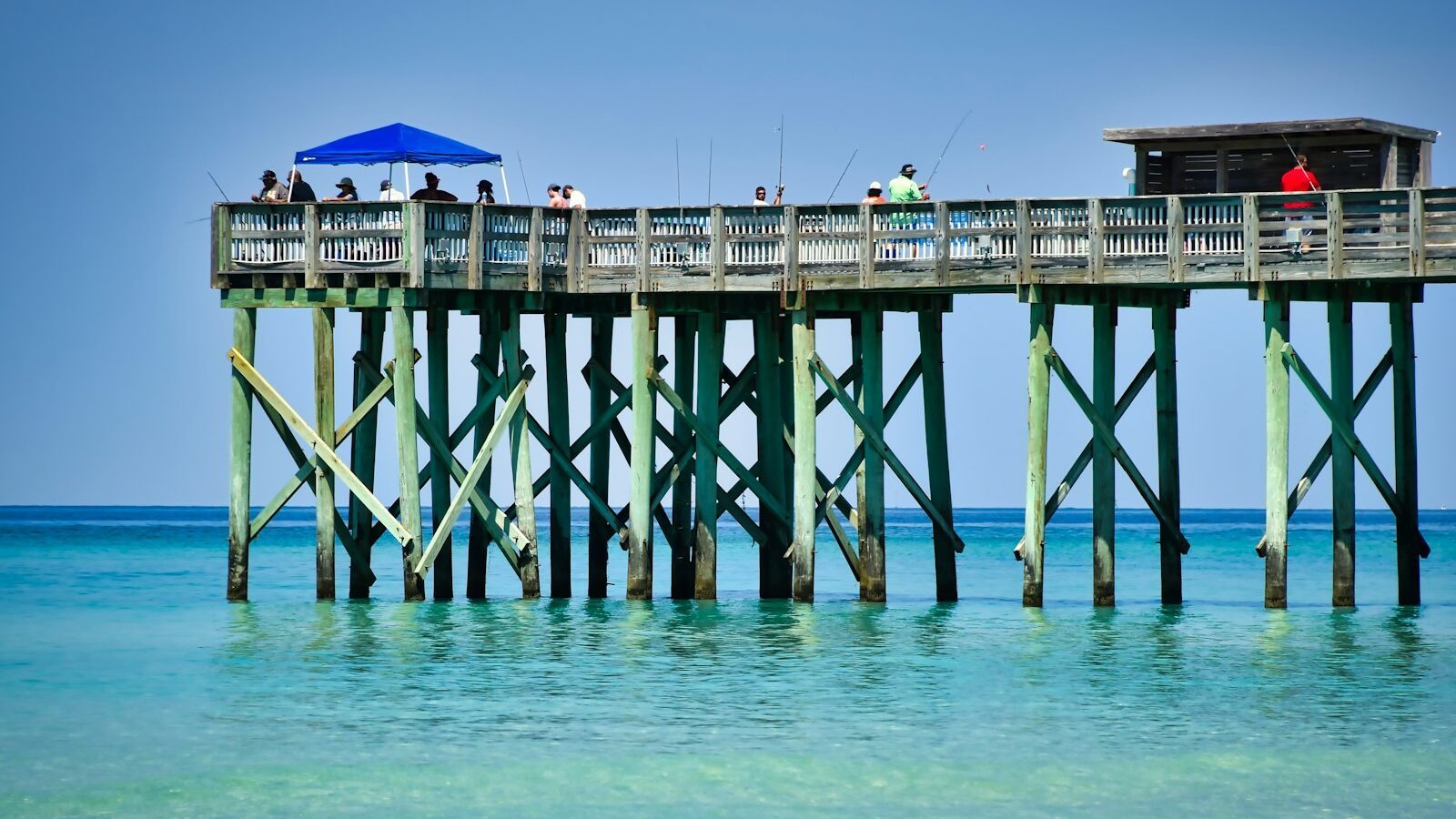
Here is the part we love most for newcomers: you do not need a boat at all. Some of the easiest and most relaxing fishing happens right from shore. The area is full of public piers, jetties, bridges, and beaches where you can walk up, cast out, and start fishing within minutes. It costs almost nothing, it is wonderfully low-pressure, and it is a perfect way to spend a golden Gulf evening.
Pier and surf fishing can produce snook, redfish, sheepshead, flounder, mackerel, pompano, and whatever else is cruising past that day. Bring a folding chair, a cooler, and a little patience, and you have got yourself a fine afternoon. It is also a great way to introduce kids to the sport.
Where to Cast: Popular Spots in General
We will let you discover your own honey holes over time, since half the fun is exploring, but here is the lay of the land. The big bays give you miles of protected flats and mangrove shoreline for inshore fishing. The passes, where the bays empty into the Gulf, are famous for moving water that concentrates fish, and they light up during tarpon season. Local piers and jetties offer instant shore access, and you can fish the beaches straight from the sand.
The barrier islands are a destination all their own, with classic fishing villages and easy access to both bay and Gulf. Our Anna Maria Island guide covers one of the most beloved spots in the region, and it is a wonderful place to wet a line. As you settle in, ask around at the local bait shops, since the folks behind the counter know what is biting and are happy to point a newcomer in the right direction.
Hiring a Charter: The Best Way to Start
If you take one piece of advice from us, let it be this: book a charter for your first time out. Hiring a local fishing guide is the fastest, easiest, and most fun way to learn the waters. A good captain provides the boat, the rods, the bait, and the knowledge, and they put you right on the fish without you having to figure any of it out.
Charters come in all shapes. You can book a half-day inshore trip to chase snook and reds, a full-day offshore run for grouper and snapper, or a specialty tarpon trip in season. Beyond the catching, you are getting a free education. A great guide will teach you the local techniques, show you productive spots, explain the tides, and answer every newbie question you throw at them. Many newcomers do a couple of charters and then feel ready to head out on their own.
Florida Fishing License Basics
Before you cast, let us talk rules, because this part trips up a lot of newcomers. In Florida, most anglers need a fishing license. Saltwater and freshwater have separate licenses, so grab the right one for where you are fishing. The good news is that licenses are inexpensive and easy to buy online, by phone, or at many bait and tackle shops, usually in hand within minutes.
Once you become a Florida resident, you qualify for resident license rates, which are very reasonable, with annual and longer-term options. If you are visiting or just got here and have not changed your residency yet, short-term licenses are available too, so you are covered for a few days without buying a full year. There are a handful of exemptions, such as certain ages and a few free fishing days, but the safe assumption is that you need a license. One handy note: when you fish from a licensed charter or party boat, the captain's license typically covers you, which is one more reason charters are great for beginners. Always check the current size and bag limits and any seasonal closures before you keep a fish. When in doubt, your guide can square you away.
Year-Round Fishing Weather
Here is the part that still makes us grin. On the Suncoast, fishing is a year-round activity. There is no real off-season the way there is up north, where the water freezes and the boats get put away for months. Our mild climate means you can fish in January just as happily as in July, and something is always biting.
The seasons do shift the action around, and that is part of the fun. Tarpon show up heavy in spring and early summer, cooler months are prime for sheepshead, and snook, redfish, and trout are around all year with patterns worth learning. Summer afternoons bring those quick pop-up showers, so many anglers fish the calmer mornings and let the weather pass. Once you learn the rhythm of the seasons, there is always a good reason to grab your rod.
A Perk of Living Here
This is what we mean when we say coastal living is special. Fishing is not a once-a-year vacation thing here, it is something you can fold right into ordinary life, whether that is a sunrise wade on the flats, a quick cast off the pier after work, or a full day offshore with friends. It gets you outside and connects you to the water that makes this region so good.
If you are still figuring out where on the Suncoast you want to land, our Sarasota area guide is a great next step, and our community matching quiz can help you find the neighborhood that fits your lifestyle, water access and all. Grab a rod, get a license, and we will see you out there.


Ready to find your place on the Suncoast?
Take the 60-second quiz to find your community, or talk to a local expert now.