
Shelling on the Gulf Coast: A Beginner's Guide
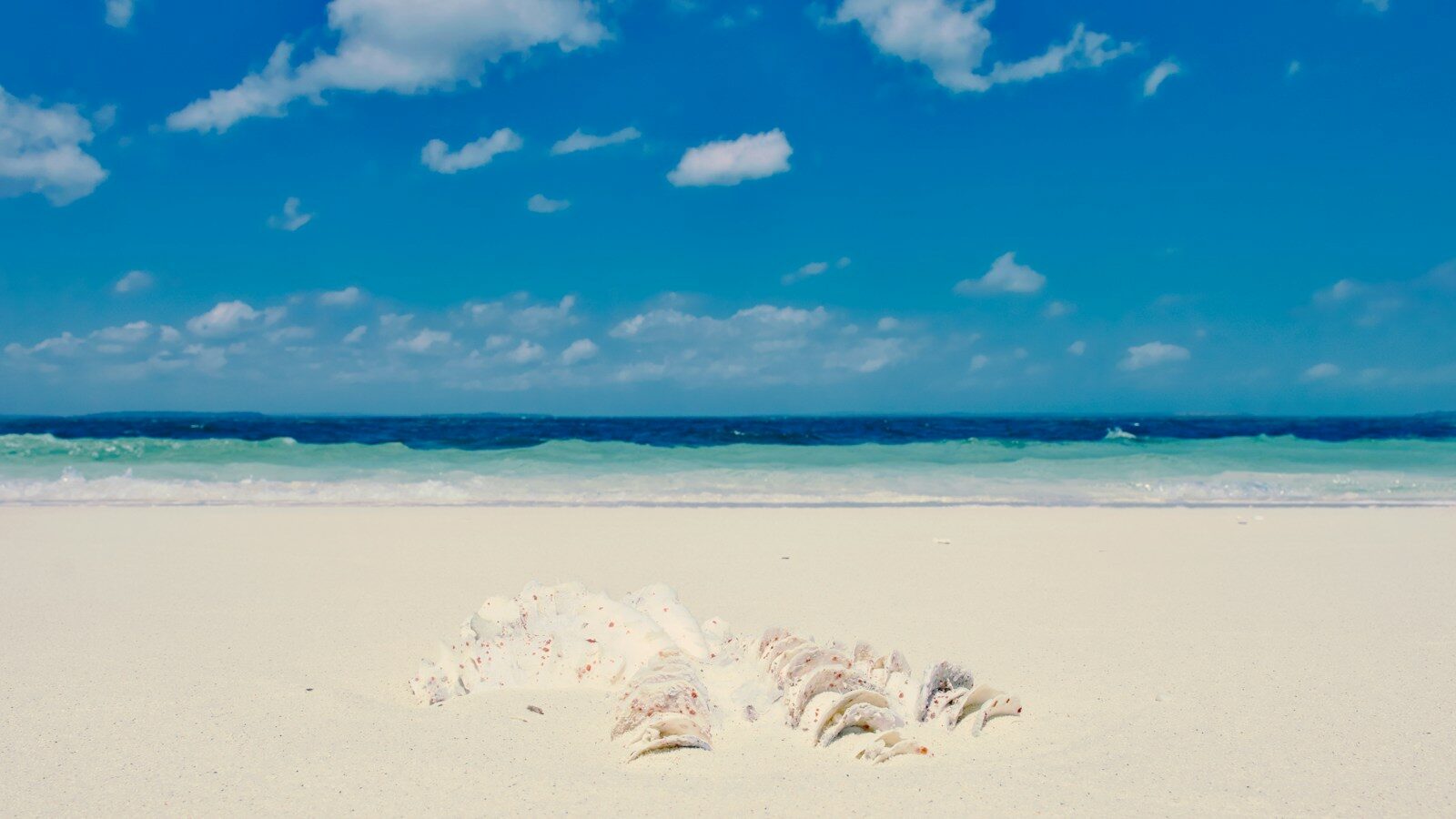
There's a particular posture you'll start noticing on Gulf Coast beaches. Head down, hands behind the back, moving slowly along the waterline. Locals call it the Sanibel Stoop, after the island south of here that's famous for it, but you'll see it on every beach in our area. These people are shelling, and once you try it you'll understand why they keep coming back.
It costs nothing, requires no equipment, and works at any age or fitness level. It also happens to be a genuinely good way to get to know your new coastline, because shelling forces you to pay attention to tides, wind, and weather in a way that a normal beach day doesn't.
Why the Gulf Coast Is Good for This
The geography does the work. The Gulf here is shallow, with a gently sloping bottom extending a long way out. That shallow shelf is full of mollusk habitat, and the wave energy is usually gentle enough that shells wash in intact rather than getting pulverized.
Our barrier islands sit at various angles to the prevailing weather, which means different beaches collect differently depending on wind direction. That's part of the craft: learning which beach to visit based on what the wind has been doing.
Timing Is Most of It
You can walk any beach at any time and find something. But if you want to find good things, timing matters more than location.
Low Tide
The single most useful rule. Low tide exposes stretches of beach that are underwater most of the day, and everything sitting there has just been delivered. Aim for the hour or so before the low and stay through it. Tide charts for our area are easy to find online and worth bookmarking.
After a Storm
The other reliable rule. Wind and wave action stir up the shallows and push material onto the beach. The morning after a front comes through, or after a stretch of hard onshore wind, is when the serious shellers turn out. After a tropical system, assuming it's safe to be out, the beaches can be transformed.
Early Morning
Partly because tides often cooperate, but mostly because you're ahead of everyone else. A beach picked over by two hundred people is a different beach than one nobody has walked since dawn. Sunrise shelling in the winter months is one of the real pleasures of living here.
Winter in General
The cooler months tend to produce better shelling, partly due to weather patterns and partly because the water is calmer and clearer. That's also when the beaches are most pleasant to walk. Our guide to Sarasota weather and seasons explains the annual rhythm.
Where to Go
Siesta Key has the famous sand, which is quartz rather than crushed shell, so it stays cool underfoot. Its shelling is decent rather than spectacular, and the south end near Turtle Beach generally does better than the main public beach.
Turtle Beach, at the southern end of Siesta, has coarser sand and noticeably more shell material. It's a favorite for people who are there to collect rather than sunbathe.
Lido Key and Longboat Key both produce well, particularly on the less-trafficked stretches away from the main access points. Our guides to Lido Key and Longboat Key cover access.
Anna Maria Island to the north has several good stretches, and the north end near the pass often collects nicely. See our Anna Maria Island guide.
Venice and Caspersen Beach south of here are a different story entirely, and worth their own section below.
Manasota Key, further south, is a long, quiet island with good collecting and far fewer people. Our Englewood and Manasota Key guide has the details.
Venice and the Shark Teeth
Venice bills itself as the shark tooth capital of the world, and the claim holds up. The seafloor off Venice contains a fossil layer from when sea levels were different, and it steadily erodes, releasing fossilized shark teeth that wash onto the beach.
They're black or dark gray, usually small, and triangular. Once you find your first one, your eye recalibrates and you start seeing them everywhere. Caspersen Beach, just south of Venice Beach, is the classic spot, and it's less developed and quieter.
Many people use a mesh scoop, sometimes called a Florida snow shovel, to sift the shallows. You can buy one locally for very little. Or just walk the wrack line and look. Our Venice relocation guide covers the town itself, which is charming in its own right.
What You'll Find
Common finds around here include lightning whelks, which are the Florida state shell and spiral counterclockwise, unusually. Fighting conchs, which are chunky and often orange inside. Olive shells, smooth and glossy. Coquinas, the tiny colorful bivalves that burrow at the waterline in fans of color. Scallops, cockles, jingle shells that are thin and translucent, and sand dollars if you're lucky.
Larger and rarer finds like junonias and true tulips turn up occasionally and are worth bragging about. A good shell identification guide, either a book or an app, makes the whole thing more interesting because you start learning what these animals actually were.
The Rules You Need to Know
This part matters. Do not take live shells. If there's an animal still in it, put it back in the water. Florida regulates the collection of live shellfish, and local rules in some areas prohibit taking live shells entirely. Beyond the legality, it's just poor practice.
Checking is easy: look inside, feel the weight, and if you're unsure, set it in the shallows and see if anything moves. Hermit crabs count as living occupants and should be left alone.
Sand dollars are frequently misunderstood. A living sand dollar is brownish and fuzzy with tiny moving spines. A dead one is white and smooth. Only take the white ones.
Also be aware that some beaches sit inside preserves or parks with their own collection rules, and sea turtle nesting season from roughly spring through fall brings additional restrictions on lighting and on disturbing marked areas. Watch for the stakes and tape and give nests a wide berth.
A Small Practical Kit
You need almost nothing. A mesh bag so sand drains out, sun protection, and water. Add a scoop if you're going for shark teeth. Some people bring a small container for fragile finds.
Once home, a soak in fresh water and a gentle scrub handles most cleaning. There are stronger methods for stubborn buildup, but go easy, since aggressive cleaning strips the natural finish that made you pick the shell up in the first place.
Why It Sticks
We've watched a lot of people move here and slowly acquire a shelf of shells they can't quite explain. Part of it is the treasure-hunt instinct. Part of it is that it gets you onto the beach early, when it's quiet and the light is good and the day hasn't started yet.
Mostly, though, it's that it makes you a regular. You learn the tides, you notice which beaches are doing well this month, you start recognizing the other early walkers. That's what turning a new place into home actually looks like.
Our guides to the best Sarasota beaches for newcomers and beach parking and access will get you oriented, and the community matching quiz can help if beach proximity is shaping where you want to live.


Ready to find your place on the Suncoast?
Take the 60-second quiz to find your community, or talk to a local expert now.