
Sarasota Traffic and Season: What Locals Actually Do
Ask a longtime resident here about traffic and you'll get a question back: what time of year? Because the honest answer changes completely depending on the calendar. The Sarasota area in September and the Sarasota area in February are, functionally, two different places to drive.
Understanding that annual swing is one of the more useful things a newcomer can learn, and it affects more than your commute. It shapes when you schedule doctor appointments, when you go to restaurants, and, for some people, which neighborhood they choose.
What Season Actually Is
Season is the stretch when our part-time population arrives. Snowbirds from the Northeast, the Midwest, and Canada, plus vacationers, plus the wave of people visiting family. The population of the metro area swells substantially.
The rough shape of it: things start picking up around late October and November as early arrivals come down. It builds through December with the holidays. January through March is the peak, and March in particular, when spring break overlays the snowbird population, is the heaviest stretch of the year. April tapers. By May it's noticeably quieter, and from June through September the area feels almost sleepy by comparison.
Our guide to the snowbird cycle covers the demographics behind this.
The Corridors That Suffer
A few specific places account for a disproportionate share of the frustration.
The Barrier Island Bridges
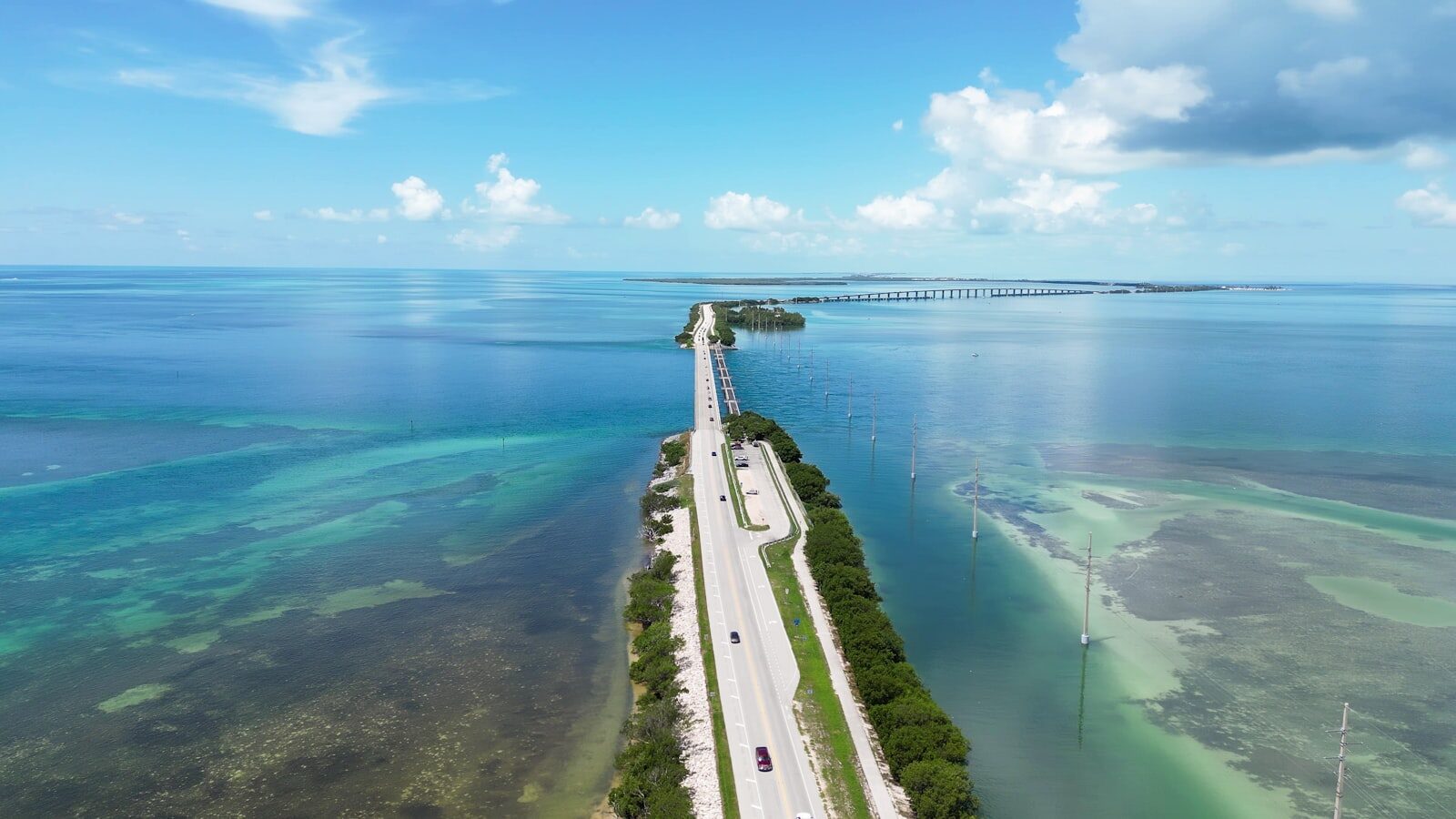
This is the worst of it, by a wide margin. The bridges to Siesta Key, Longboat Key, Lido and St. Armands, and Anna Maria Island are limited-capacity connections to islands with limited road networks and enormous seasonal demand.
On a beautiful Saturday in March, the approach to Siesta Key can back up substantially, and getting onto Anna Maria via the Manatee Avenue or Cortez Road bridges can take far longer than the distance suggests. Several are drawbridges, which adds an entirely separate category of delay when they open for boat traffic.
Residents of the islands plan around this as a fact of life. People on the mainland learn to go early, go late, or go midweek. Our guide to beach parking and access covers the tactics.
Tamiami Trail
US 41 runs the length of the region as the main north-south surface route, through downtown Sarasota and along the coastal corridor. It's signal-heavy, commercially dense, and carries both local and through traffic. In season it slows considerably, particularly through the Sarasota and Venice stretches.
The Downtown Roundabouts
Sarasota has installed a series of roundabouts along the US 41 bayfront and in the downtown area. Locals have opinions. In practice they move traffic reasonably well once people know how to use them, and the friction comes largely from drivers who are unfamiliar, which describes a substantial share of drivers in February.
If you're new: yield to traffic already in the circle, signal your exit, and don't stop inside the roundabout. That's most of it.
University Parkway and the UTC Area
The corridor connecting I-75 to the airport and the UTC shopping district carries heavy retail traffic year-round and more in season. It has seen significant improvement work over the years, but it remains busy.
I-75
The interstate is the fast way to move north and south, and it generally works. In season it carries more volume, and incidents cause outsized backups because the alternatives are limited. Construction projects on it are a recurring feature of life here.
The Skyway
Heading to St. Petersburg or Tampa, the Sunshine Skyway is beautiful and generally flows well, but it's exposed and can close in high winds. Worth knowing if you commute that direction. Our guide to Sarasota versus Tampa covers the relationship between the two.
The Habits Residents Develop
People who've been here a while adjust their lives around season, usually without consciously deciding to.
Timing. Errands happen before ten or after two. Restaurant dinners happen at five or at eight-thirty, not at seven. Beach trips happen in the morning.
Weekday bias. Anything optional moves to a weekday. Weekend days in season are for staying local.
Appointment scheduling. This is the big one and it catches newcomers. Doctors, dentists, specialists, and contractors are all much harder to book in season. Medical practices here see a large seasonal patient influx. If you need a routine appointment, book it in the summer or book very far ahead.
Our guides to healthcare in Sarasota and finding doctors cover establishing care, which is worth doing in the quiet months.
Contractors and services. Same pattern. Getting a contractor, a pool service, or a landscaper to show up is easier in the off months. Our guide to hiring a contractor covers the rest.
Local knowledge routes. Every resident develops a set of back routes that avoid the main corridors. You'll build yours within a year.
How Much It Should Affect Where You Live
Honestly, less than people fear, with a few exceptions.
Living on a barrier island means accepting bridge dependency permanently. That's a genuine lifestyle factor, not just an inconvenience, particularly if you have regular mainland commitments.
Living immediately adjacent to a major bridge approach or a beach access route means seasonal congestion at your doorstep.
Beyond that, most of the region's neighborhoods are reasonably insulated. The communities east of I-75, including much of Lakewood Ranch and Palmer Ranch, have internal road networks and access to the interstate that keep them out of the worst of it. Our guide to getting around Sarasota covers the broader transportation picture.
If you'll be commuting, drive the commute at the actual hour before you buy, and ideally in February. A route that's pleasant in July can be a different experience in season.
The Other Side of Season
It's worth saying that season isn't purely a burden. The seasonal population is a large part of what supports the restaurants, the arts organizations, the events calendar, and a meaningful share of the local economy. The Sarasota that has an opera, a ballet, a symphony, and dozens of good restaurants is the Sarasota that fills up in February.
Season is also genuinely fun. The energy is different, everything is open, and the calendar is full. Our guide to annual events and festivals shows how much of it clusters in those months.
And then there's the flip side that nobody tells newcomers about: the summer emptiness is wonderful. Beaches with room, restaurants with tables, and a fifteen-minute drive that stays fifteen minutes. A lot of residents quietly prefer it, heat and all. Our guide to living through a Sarasota summer covers the tradeoff.
A Note on Driving Culture
Our roads carry an unusually wide mix of drivers: longtime locals, visitors following GPS directions in unfamiliar territory, and a large population of older drivers. The practical advice is to leave more following distance than you would elsewhere, expect sudden slowdowns near beach access points and shopping entrances, and be patient at roundabouts.
Florida also has a significant uninsured driver population, which is a good argument for carrying uninsured motorist coverage. Our guide to Florida car insurance and registration covers what to carry.
The Takeaway
Season is real, it's predictable, and it's manageable once you build your life around it. The people who struggle are the ones who try to run a February schedule on August assumptions.
If you haven't experienced both halves of the year here, we'd encourage visiting in each before you settle on a neighborhood. Our community matching quiz can narrow the options, and our first year roadmap covers what to expect month by month.


Ready to find your place on the Suncoast?
Take the 60-second quiz to find your community, or talk to a local expert now.